Snowflake Data Breach 2024: Cloud Security Misconfigurations That Led to Data Exposure
Explore how the Snowflake data breach 2024 exposed cloud security risks, misconfigured access controls, and key strategies to prevent data breaches.
Cloud Security Risks in Modern Data Platforms
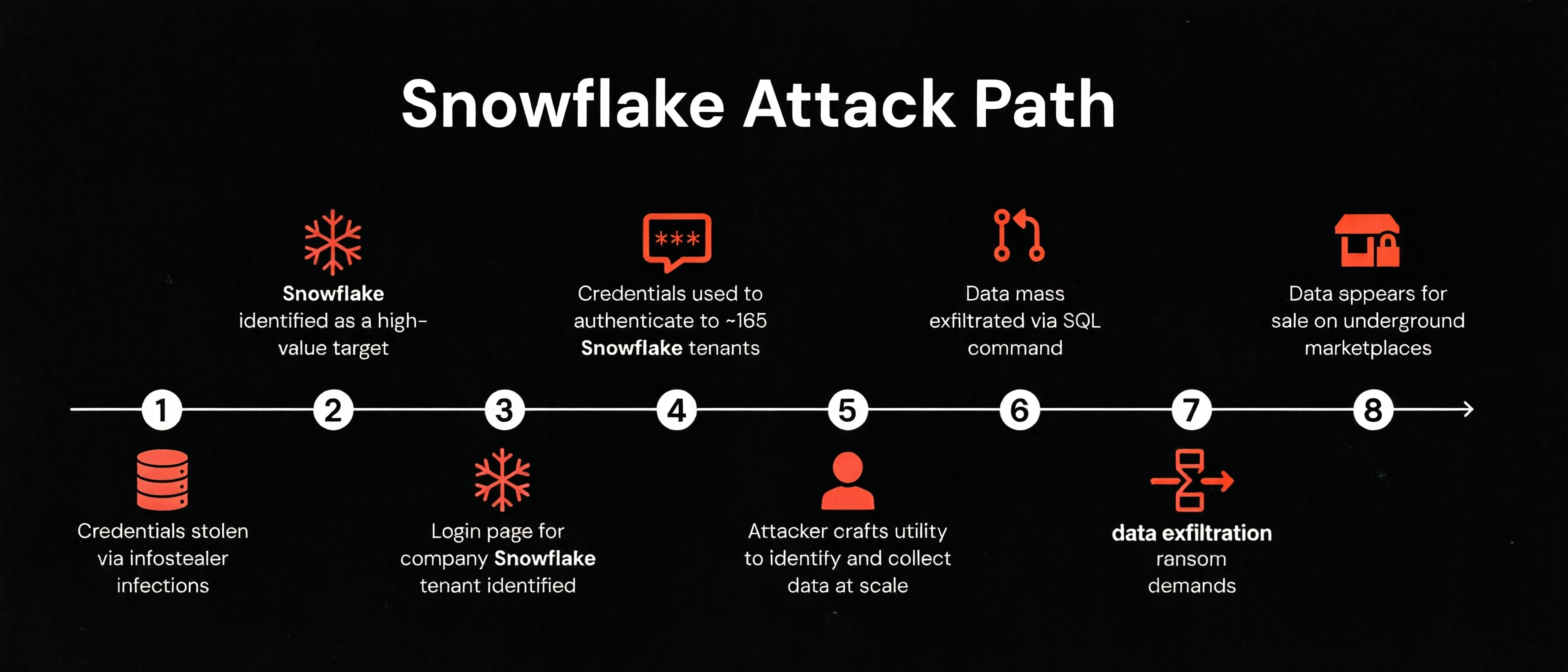
Cloud platforms are the backbone of modern data infrastructure, enabling organizations to store, process, and analyze large volumes of sensitive information.
The Snowflake data breach 2024 highlights how cloud security misconfigurations and weak access controls can expose critical data assets. Even advanced cloud environments remain vulnerable without continuous monitoring and proactive security enforcement.
The Snowflake Data Breach 2024: What Happened
Snowflake, a leading cloud data warehousing platform, experienced a significant security incident involving unauthorized access to customer data.
Key Highlights of the Breach
- Exploitation of misconfigured access controls
- Unauthorized access to sensitive datasets
- Exposure of customer and proprietary information
Unlike traditional ransomware attacks, this breach was driven by cloud security gaps, making it a critical example of configuration-based vulnerabilities.
Root Cause Analysis: Cloud Security Failures
The Snowflake breach resulted from multiple layered security weaknesses rather than a single point of failure.
Misconfigured Access Controls
Improper access policies allowed attackers to:
- Escalate privileges
- Access restricted datasets
- Move laterally across systems
Lack of Continuous Monitoring
Limited visibility into system activity resulted in:
- Delayed threat detection
- Increased attacker dwell time
- Higher overall impact
Third-Party and Integration Risks
External integrations introduced:
- Expanded attack surfaces
- Dependency on third-party security practices
- Complex access management challenges
Impact of the Snowflake Data Breach
Cloud security incidents can have widespread consequences across business operations.
Data Exposure Risks
Sensitive customer and business data may be compromised or exfiltrated.
Reputational Damage
Loss of customer trust and brand credibility can have long-term consequences.
Compliance and Regulatory Risks
Organizations may face penalties due to data protection violations.
Operational Disruption
Security incidents can impact system availability and business continuity.
Key Lessons for Strengthening Cloud Security
The Snowflake data breach 2024 provides critical insights for organizations operating in cloud environments.
Implement Strong Access Control Mechanisms
- Enforce least privilege access
- Regularly audit permissions
- Remove unnecessary access rights
Enable Continuous Monitoring and Detection
- Deploy real-time threat monitoring
- Configure alerts for suspicious activity
- Reduce detection and response time
Conduct Regular Cloud Security Audits
- Identify misconfigurations proactively
- Validate security policies
- Perform periodic risk assessments
Manage Third-Party Risks Effectively
- Evaluate vendor security posture
- Restrict third-party access
- Monitor integration activity
Establish Incident Response Readiness
- Develop a clear response plan
- Conduct regular security drills
- Ensure rapid containment and recovery
The Future of Cloud Security: Evolving Defense Strategies
As cloud adoption grows, security strategies must evolve to counter advanced threats.
Key trends include:
- Zero Trust security models
- Granular identity and access management
- AI-driven threat detection
- Continuous security validation
Organizations must treat cloud security as an ongoing, adaptive process.
Conclusion: Proactive Cloud Security is Non-Negotiable
The Snowflake data breach 2024 demonstrates that even leading platforms are vulnerable to cloud security misconfigurations.
Without continuous monitoring, strong access controls, and proactive security assessments, organizations risk exposing critical data and systems.
A layered and proactive approach is essential to maintaining a secure and resilient cloud environment.
Protect Your Cloud Infrastructure from Data Breaches
Cloud misconfigurations remain one of the leading causes of modern data breaches.
Securelyn delivers comprehensive Security as a Service, helping organizations identify vulnerabilities, strengthen access controls, and implement continuous monitoring across cloud environments.
Partner with Securelyn to secure your cloud infrastructure, prevent data breaches, and stay ahead of evolving cybersecurity threats.